

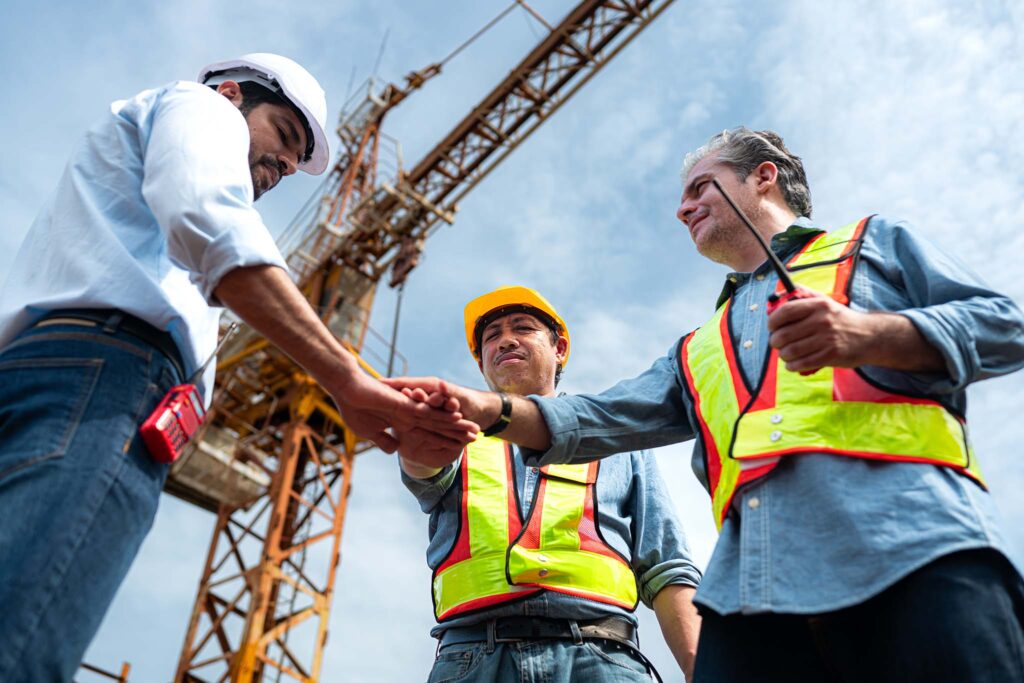
With the design–build model (one contract), the investor gets a single accountable party for both design and construction: less blame-shifting, faster decisions, and lower coordination costs.
15 questions you should ask
- Can you show 3 similar projects (photo/drone, references)?
- Who is the license holder and who is responsible for supervision?
- Do you work with notary escrow and stage-based payments?
- What do the monthly reports look like (drone/photo, progress metrics)?
- What exactly does the specification/cost schedule include (materials/brands, quantities)?
- What are the deadlines per stage and what happens in case of delays?
- Who is the point of contact and what does communication look like (cadence, tool)?
- Do you have insurance / 10/1 warranties (structural/workmanship)?
- Who handles geotechnical work/testing and who pays for it?
- How do you handle changes (variations) — process and pricing?
- In what order do you procure materials — advances, storage?
- How is handover done (snag list, defect rectification)?
- Can I get the contact details of an investor from a previous project?
- How do you ensure safety on the construction site?
- Do you guarantee post-handover service (within 30 days)?
Red flags (stop immediately)
- “Advance payment to the company account, without a notary.”
- “Deadlines are flexible, we’ll see as we go.”
- No supervision, no monthly reports.
- Unclear specification/cost schedule (brands and quantities “as needed”).
- References with no contacts and no drone/photo evidence.
What must be in the contract
- Clear milestones (e.g., foundation, slab, façade, installations, finishes).
- Notary escrow and the conditions for releasing funds.
- 10/1 warranties + handover documentation.
- Reporting pack (monthly drone/photo) + a stage review meeting.
- Penalties / extensions in the event of objective delays.